Camping in Iceland is not like camping in your home country. Therefore, today we are providing you with Iceland camping tips so you can prepare.
What You Need
Money – Iceland does have credit card machines at locations that sell items. However, you still need to make sure that you have some cash on hand to make sure that you are prepared in the event that an emergency arises.
Alcohol – The government is in charge of alcohol distribution in Iceland. This means that you are not going to find beer anywhere. However, there are some state alcohol stores yet they are only in major towns and they can be hard to find since advertising alcohol is illegal.
Therefore, before coming camping you need to make sure that you stock up.
Food – Make sure that you have a cooler. If you plan to rent a campervan, they will probably come equipped with one. Having a cooler is going to save you money because you can fill it with the items that you need.
It is suggested that you purchase local food during your journey so you can have fresh food and support the smaller towns. If you get a craving for some junk food, you can always stop at one of the many gas stations that you will pass.
Staying Clean During Your Iceland Camping Trip
Bathing – When traveling in Iceland you can camp wherever you desire. This is nice because you are able to experience nature yet after a few days of doing so you are not going to smell so pleasant. The good news is Iceland has tons of geothermal energy, which enables them to pump boiling water out of the earth at a fair price.
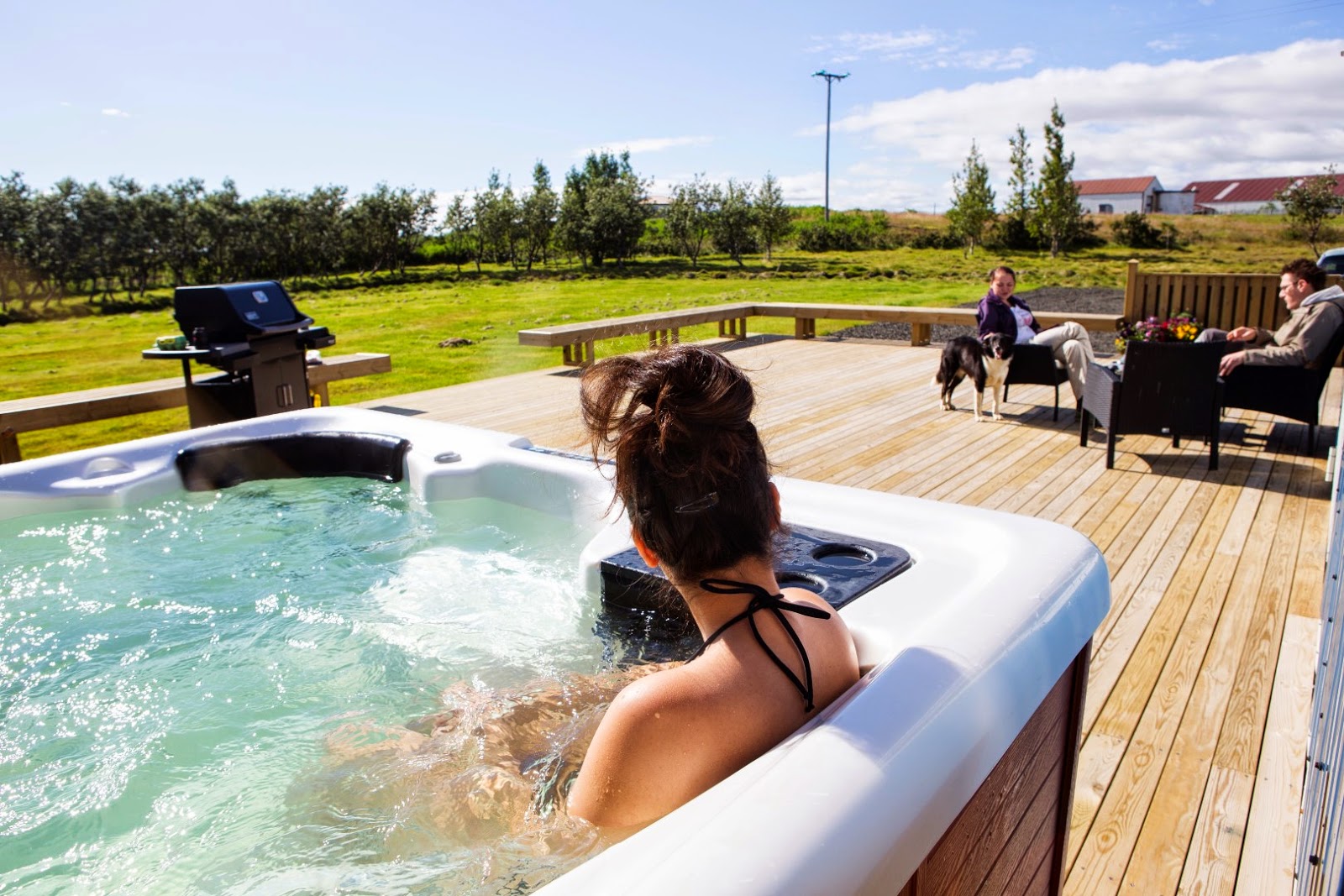
Iceland is also full of swimming pools/hot tubs. It is suggested that you go swimming daily when camping in Iceland.
Doing Laundry – When at the campsites you have access to washing machines that can be rented for an affordable price.
Closing Thoughts
If you are planning a camping trip and need to rent a motorhome/campervan in Iceland or have any more questions, read our article, which includes price comparisons for reputable companies.
Enjoy your camping trip in Iceland!
Mike, Iceland24
© 2015 Iceland24
Where to stay during a trip to Iceland
There are many types of accommodations in Iceland: campgrounds, guesthouses, bed and breakfasts, huts, rental cottages, hotels... Reservations are not necessary in winter, but during high season (June to August), we strongly recommend booking in advance because most places are full. It is a good idea to bring along a sleeping bag because sheets cost extra in hostels, and some guesthouses and cabins for rent. These prices are given as a guideline and refer to high season rates, so do not be surprised if they seem outrageous. In winter, lodgings are available for half that price, especially outside the capital.
For budget accommodations during the summer season (June to August), or off-season if you are brave and well-equipped, camping is your best option. No reservations are required. There are about 200 campgrounds spread throughout Iceland; they are listed online at http://tjalda.is. Rates range from 1 000 to 1 500 ISK per night, per person.
The Ferðafélag Íslands Association manages the huts stationed along the hiking trails. The list of huts is available on their website, http://www.fi.is. Per night, per person rates fall between 5 000 and 7 000 ISK. The huts have a small housing capacity and must be reserved well in advance.
Hostels are an affordable option, whether travelling alone or in a group. Rates start at around 4 500 ISK for a dormitory, 7 500 ISK for a single room and 20 000 ISK for a four-person room. Bathrooms and kitchens are shared. Breakfast is not included. http://www.hostel.is
Guesthouses or bed and breakfasts are everywhere in Iceland, and offer private rooms with different options or extras: private bathroom, breakfast, find the combination that is right for you. Rates are generally between 120 and 180 euros. The Iceland Tourism Office’s website lists them by region here: http://www.visiticeland.com. We recommend this little guesthouse in North Iceland: http://www.elfguesthouse.com
Icelandic Farm Holidays offers more than 170 lodgings, of all types and at any price, in the Icelandic countryside. More information is available on their website, http://www.farmholidays.is.
Airbnb is a new platform for staying in Icelandic houses or apartments during your trip. You can rent one room in a house or the entire home. Prices vary significantly depending on lodging type, date and city. https://www.airbnb.com
Hotels are plentiful in Iceland. Except for the Edda hotel chain, which are schools converted to hotels for the summer, they are expensive. If you can find a double room in a Hotel Edda for 100 euros, then the same room in a traditional hotel will cost double. http://www.hoteledda.is/en
If you are travelling as a family or in a group, you can reserve Icelandic summer cottages on http://bungalo.is. Most cottages have a two-night minimum stay and must be clean upon departure.
Berglind Rós
Iceland24, June 2015
For budget accommodations during the summer season (June to August), or off-season if you are brave and well-equipped, camping is your best option. No reservations are required. There are about 200 campgrounds spread throughout Iceland; they are listed online at http://tjalda.is. Rates range from 1 000 to 1 500 ISK per night, per person.
The Ferðafélag Íslands Association manages the huts stationed along the hiking trails. The list of huts is available on their website, http://www.fi.is. Per night, per person rates fall between 5 000 and 7 000 ISK. The huts have a small housing capacity and must be reserved well in advance.
Hostels are an affordable option, whether travelling alone or in a group. Rates start at around 4 500 ISK for a dormitory, 7 500 ISK for a single room and 20 000 ISK for a four-person room. Bathrooms and kitchens are shared. Breakfast is not included. http://www.hostel.is
Guesthouses or bed and breakfasts are everywhere in Iceland, and offer private rooms with different options or extras: private bathroom, breakfast, find the combination that is right for you. Rates are generally between 120 and 180 euros. The Iceland Tourism Office’s website lists them by region here: http://www.visiticeland.com. We recommend this little guesthouse in North Iceland: http://www.elfguesthouse.com
Icelandic Farm Holidays offers more than 170 lodgings, of all types and at any price, in the Icelandic countryside. More information is available on their website, http://www.farmholidays.is.
Airbnb is a new platform for staying in Icelandic houses or apartments during your trip. You can rent one room in a house or the entire home. Prices vary significantly depending on lodging type, date and city. https://www.airbnb.com
Hotels are plentiful in Iceland. Except for the Edda hotel chain, which are schools converted to hotels for the summer, they are expensive. If you can find a double room in a Hotel Edda for 100 euros, then the same room in a traditional hotel will cost double. http://www.hoteledda.is/en
If you are travelling as a family or in a group, you can reserve Icelandic summer cottages on http://bungalo.is. Most cottages have a two-night minimum stay and must be clean upon departure.
Berglind Rós
Iceland24, June 2015
Icelandic horses: About the Icelandic Horse
When traveling around Iceland, you will probably notice the Icelandic horse, wherever you go. The small horse might look wild, but it is known for being very friendly, it is also believed to be one of purest horse breeds in the world. So what is Icelandic horse and why is he so unique? Here will be answers for those questions.
This small horse (average 135cm) came to Iceland when first viking settlers sailed to Iceland around year 800. Even though it is not a big horse, it is very strong, can carry a full-grown man and has adapted to Icelandic weather conditions very well. Most of the time horses spend outside, and during the winter time they grow very thick coat to protect themselves from the cold and strong winds.
The Icelandic horse is enormously muscular, and with very dense bones, often with a heavy head and compact body. This breed is possessed of great agility and is also very sure-footed.
Icelanders are very proud of their horse, and it is not recommended to talk bad about their horses in front of them. Even they are in size of ponies, they are not called Icelandic pony.
The Icelandic horse is the only horse breed in Iceland. Natives are doing everything they can to protect their breed. That´s why all horse import in Iceland is strongly forbidden, no exceptions. Once the horse leaves Iceland, it never returns back. That way Icelanders can make sure their breed is pure and also no diseases come to the country.
Because Iceland is geographically isolated, with help of import ban, only very few horse diseases are known here. Which makes difficult for horses that leave this country, as they are are not immune for sicknesses that are popular in other countries.
Back in the days Icelandic horse was very important part of Icelandic people. Before cars came, it was the only way of transportation. Iceland is also one of not so many contries that eat horse meat (also still today). A popular entertainment among vikings was also stallion fights. Nowadays Icelandic horse is bred for leisure, sport and also meat.
The icelandic horse has 5 gaits. The gaits are walk, trot and canter/gallop, like in other horses, but also the super smooth tolt and many of the Icelandics also master the 5th gait, the thrilling and fun flying pace.
The tolt is a smooth four beat gait (similar to the running walk or rack) The rider sits virtually bounce free at speeds up to 20 mph. You can carry a glass full of beer or your favorite drink while riding the tolt, without fear of spilling it. The tolt is a natural gait, and you often see foals and grown horses tolting in the pasture.
It is very popular among tourists to explore Iceland on horseback, there are many horse rentals all over Iceland that offer shorter and longer horse riding tours. If you have never had experience with horses, Iceland is a place to give it a try. Icelandic horse is a gaited horse, which means besides the „regular“ gaits that all horses have – walk, trot and canter, Icelandic horse has two „extra“ – tölt: very comfortable gait, often said to be faster version of walk and flying pace: a very fast gait, where the horse shows off all his power.
If you are interested in trying to ride and Icelandic horse, contact Icelandic Excursions (info@landmannalaugartours.com), and they will help you to find right riding tours that suits you.
Peter, Iceland24
June 2015
The Icelandic horse is enormously muscular, and with very dense bones, often with a heavy head and compact body. This breed is possessed of great agility and is also very sure-footed.
Icelanders are very proud of their horse, and it is not recommended to talk bad about their horses in front of them. Even they are in size of ponies, they are not called Icelandic pony.
The Icelandic horse is the only horse breed in Iceland. Natives are doing everything they can to protect their breed. That´s why all horse import in Iceland is strongly forbidden, no exceptions. Once the horse leaves Iceland, it never returns back. That way Icelanders can make sure their breed is pure and also no diseases come to the country.
Because Iceland is geographically isolated, with help of import ban, only very few horse diseases are known here. Which makes difficult for horses that leave this country, as they are are not immune for sicknesses that are popular in other countries.
Back in the days Icelandic horse was very important part of Icelandic people. Before cars came, it was the only way of transportation. Iceland is also one of not so many contries that eat horse meat (also still today). A popular entertainment among vikings was also stallion fights. Nowadays Icelandic horse is bred for leisure, sport and also meat.
The icelandic horse has 5 gaits. The gaits are walk, trot and canter/gallop, like in other horses, but also the super smooth tolt and many of the Icelandics also master the 5th gait, the thrilling and fun flying pace.
The tolt is a smooth four beat gait (similar to the running walk or rack) The rider sits virtually bounce free at speeds up to 20 mph. You can carry a glass full of beer or your favorite drink while riding the tolt, without fear of spilling it. The tolt is a natural gait, and you often see foals and grown horses tolting in the pasture.
It is very popular among tourists to explore Iceland on horseback, there are many horse rentals all over Iceland that offer shorter and longer horse riding tours. If you have never had experience with horses, Iceland is a place to give it a try. Icelandic horse is a gaited horse, which means besides the „regular“ gaits that all horses have – walk, trot and canter, Icelandic horse has two „extra“ – tölt: very comfortable gait, often said to be faster version of walk and flying pace: a very fast gait, where the horse shows off all his power.
June 2015
Subscribe to:
Posts (Atom)