Showing posts with label Althing. Show all posts

The Golden Circle - A best of Iceland in one day

The Golden Circle is Iceland's most popular sightseeing tour - and for good reason! In one day you‘ll get to see a magnificent waterfall, the world's oldest parliament and a hot spring area where the famous Geysir resides.


The name Golden Circle might be a tourist-industry tag, but it’s also apt, as this broad circuit east from Reykjavík covers many of Iceland’s best-known features and touches on the root of much of its history. The key area is Þingvellir, whose dramatic and geologically unstable rift valley marks where the Icelandic state sprang into being in Viking times. 

Iceland Golden Circle - The Golden Circle Day Tour

South from here is the religious centre of Skálholt, where Iceland’s last Catholic bishop was assassinated in 1550; while travelling northeast takes you past the spa town of Laugarvatn to Geysir, the original hot blowhole that has lent its name to similar vents worldwide, before sealed roads end on the edge of Iceland’s barren interior at Gullfoss’ thundering twin cataracts.

Þingvellir National Park

Þingvellir (Thingvellir) is the National Park where the Althing, an open-air assembly representing the whole of Iceland, was established in 930 and continued to meet until 1798. Over two weeks a year, the assembly set laws - seen as a covenant between free men - and settled disputes. The Althing has deep historical and symbolic associations for the people of Iceland. 

Iceland Golden Circle - The Golden Circle Day Tour

The property includes the Þingvellir National Park and the remains of the Althing itself: fragments of around 50 booths built from turf and stone. Remains from the 10th century are thought to be buried underground. The site also includes remains of agricultural use from the 18th and 19th centuries. The park shows evidence of the way the landscape was husbanded over 1,000 years.

Diving is permitted in two submerged rifts in the Park, Silfra and Davíðsgjá. Silfra is one of the best spots for diving in Iceland and many people find the rift unique on an international scale

Iceland Golden Circle - The Golden Circle Day Tour

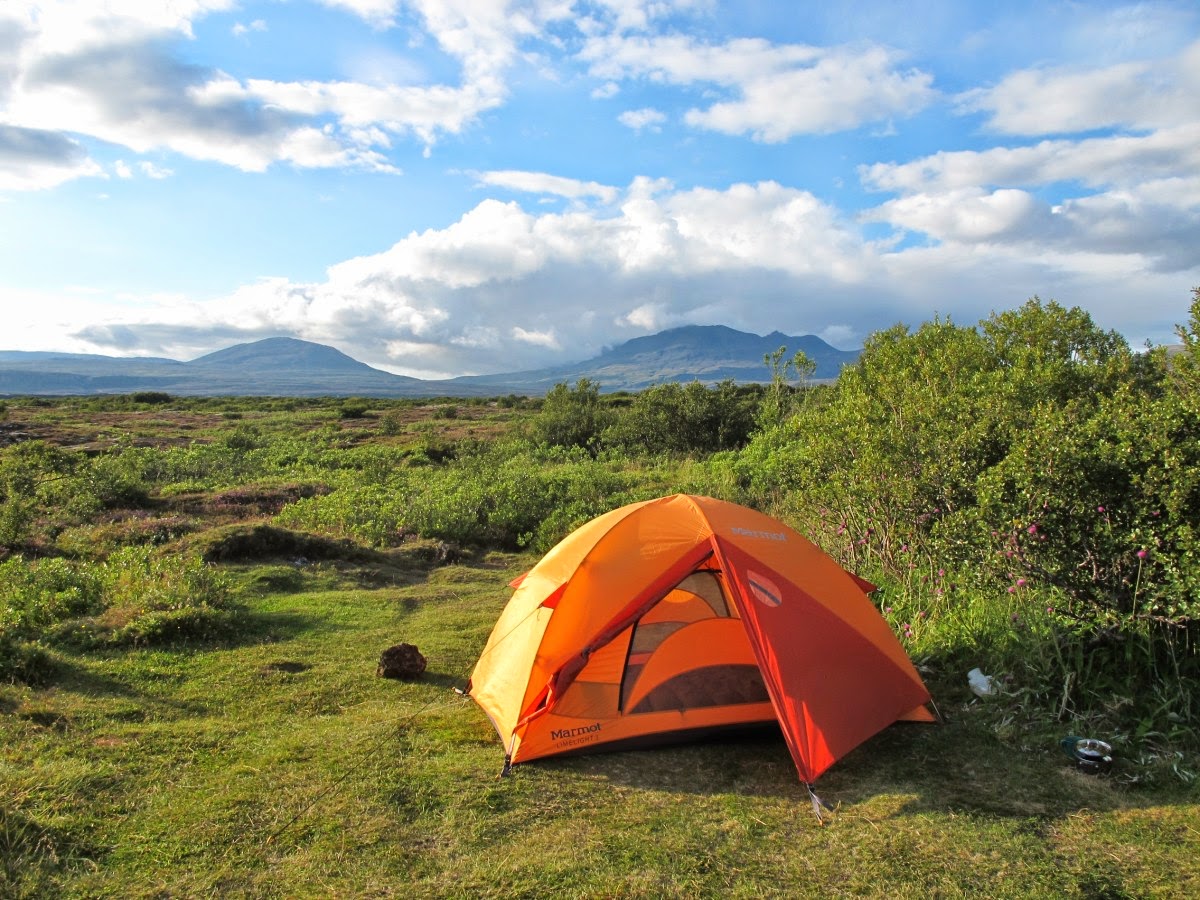
Camping in Þingvellir

Camping is only permitted in two areas in the National Park. At Leirar, which is within a 5 minutes walking distance from the Information Center, and in Vatnskot, by lake Þingvallavatn. At Leirar there are four camping grounds: Fagrabrekka, Syðri-Leirar, Hvannabrekka and Nyrðri-Leirar. The Vatnskot camp ground is situated at an abandoned farm site by the lake.
Iceland Golden Circle - The Golden Circle Day Tour

Geysir

Geysir, sometimes known as The Great Geysir, is a geyser in southwestern Iceland. It was the first geyser described in a printed source and the first known to modern Europeans.

The English word geyser (a spouting hot spring) derives from Geysir. The name Geysir itself is derived from the Icelandic verb geysa, "to gush", the verb from Old Norse. Geysir lies in the Haukadalur valley on the slopes of Laugarfjall hill, which is also the home to Strokkur geyser about 50 metres south.

Eruptions at Geysir can hurl boiling water up to 70 metres in the air. However, eruptions may be infrequent, and have in the past stopped altogether for years at a time.

Iceland Golden Circle - The Golden Circle Day Tour

Gullfoss waterfall

Gullfoss is actually two separate waterfalls, the upper one has a drop of 11 metres and the lower one 21 metres. The rock of the river bed was formed during an interglacial period.

Water flows over Gullfoss at an average rate of 109 cubic metres per second. The heaviest floods have recorded a flow of 2000 cubic metres per second. During the summer the flow is 130 cubic metres per second, which would take only 3 seconds to fill this building. People were eager to exploit the power potential of Gullfoss and many plans for hydroelectric developments on the river Hvítá have been proposed.

Iceland Golden Circle - The Golden Circle Day Tour

Everyone that visits Iceland cannot miss the Golden Circle tour. But the ultimate question is whether you should visit the Golden Circle with a tour company, or self drive the Golden Circle in one day yourself? I highly recommend doing the latter.

What kind of rental car do I need in Iceland?

Depending on the time of year you go, and what your travel plans are, you should be fine just getting a small sedan.

Iceland Golden Circle - The Golden Circle Day Tour

If you are heading there in winter (November – March) you may want to consider picking up a 4×4. This is because some roads can be closed and the roads very icy/snowy. Just check the Iceland road conditions on this official website before you head out.

How to get there

There are several different ways to start the Golden Circle, including of course the option to drive clockwise or anti-clockwise. Here's a map for reference.

Generally it is better to drive clockwise and to begin by taking Route #1 (east) in the direction Vík, but just to the edge of Reykjavík, then turning north (left) onto the 431 and 435. 

Iceland Golden Circle - The Golden Circle Day Tour

Johanna & Petrea, Iceland24
July 2015

Where Do Icelanders Come From?

How long has Iceland been inhabited? Who are the natives? Where do the Icelanders come from?


Settlement in Iceland 

Historians agree that Icelandic settlement began in 874 when a Norwegian Viking called Ingólfur Arnarsson was the first one to settle in the country. He landed in a bay where he saw steam rising from the earth, which he mistook for smoke. He named this place 'Bay of Smoke' or in Icelandic 'Reykjavík'. It wasn't until almost a millennium later that this location became a city (in 1786) and later the capital of Iceland.


The Icelandic Age of Settlement is considered to have taken place between 874 and 930 when the parliament, Althing, was founded in Thingvellir. Þingvellir forms a part of the Golden Circle, a popular tourist route, if you are interested in the Icelandic history you can also combine a tour of the Golden Circle with the Saga trail.


Recent excavations in Reykjavík revealed ruins that date from 871 (+/- 2 years) and there is some mention of Norse Vikings encountering Gaelic monks living in Iceland in the settlement years. Still today, it is possible to read about the Vikings in the Icelandic Sagas.


Icelandic Ancestry 

In fact, Icelanders have about 60% Norse origins and the rest is Scottish or Irish heritage. This is because the Vikings would stop on their way to Iceland in Scotland and Ireland and take people hostage and transfer them to Iceland to use as slaves.


Obviously with time, some 'merge' took place. This explains the fair complexion of Icelanders, with the majority of them having blonde or slightly ginger hair and blue eyes. Some people joke that this explains why the Icelandic men are strong and the women are beautiful, through the strong 'survival of the fittest' Viking genes and the beauty from Gaelic belles.


Icelandic Independence

Iceland was ruled by Denmark, then Norway and again Denmark for centuries and didn't gain it's independence until 1944. Iceland's independence day was chosen to be the 17th of June, the birthday of Jón Sigurðsson, the leader of the independence movement in the 19th century, even though he died in 1879.


Interestingly, Jón is often called 'Jón president' and some people mistake him for being Iceland's first president. That is obviously not true since he died years before Iceland gained independence but this is because he was a president of an Icelandic Literature Society in Copenhagen and also a president at Althing several times. You can see Jón's picture on the Icelandic 500 ISK note or look at the statue of him at Austurvöllur.


Modern Day 

Iceland Today, around 320 thousand people live in Iceland. Only about 30 thousand are immigrants - from various different countries. Native Icelanders can still trace their origins hundreds of years back, simply by looking it up in the National Registry online.

Source: Guide to Iceland
May 2014
Iceland24