Showing posts with label iceland. Show all posts

Rent a car in Iceland: Car Comparison by price in Iceland + Tips for Renting a Car in Iceland

If you’re planning to tour Iceland by car, then Iceland car rentals provide the cheapest and best way to explore the vast island. With public transportation being scarce outside major cities like Reykjavík, renting a car becomes the cheaper and most viable option for tourists to explore the island fully. Though it may seem expensive initially, it is much cheaper and less strenuous than having to purchase a car or travel by bus. With plenty of car rental companies in Iceland at your disposal, you will never fail to get a deal that suits your budget. 

Car Rental Iceland - Iceland Car Rental - Rent a Car in Iceland

The wide array of vehicles available for hire also makes it possible for you to get a car that can take you almost anywhere on the island from SUVs, four wheel cars, luxury cars, 4×4 rental cars and jeeps just to mention a few. In this article, we give you some tips on picking an Iceland car rental provider as well as taking a look at some of the best car rental companies on the island. 

CAR COMPARISON BY PRICE
July 11th to July 19th - 2016 (8 days)

Option A - New cars:

CARS ICELAND                      BEST COMPANY NOVEMBER 2015 (1st place)
Kia Rio Diesel:                            652€
Dacia Duster 4x4:                       999€
*prices with all insurances included

HERTZ
Toyota Aygo:                                956€
Toyota Rav4:                               1.903€

REYKJAVÍK AUTO                     BEST COMPANY NOVEMBER 2015 (3rd place)
Renault Clio:                                539€
Dacia Duster 4x4:                        917€

EUROPCAR
Hyundai i10:                                 962€
Suzuki Grand Vitara 4x4:             1.671€

REYKJAVÍK CARS *                  BEST COMPANY NOVEMBER 2015 (2nd place)
Hyundai i10:                                  528€
Suzuki Grand Vitara 4x4:              1.008€ 

AVIS
Hyundai i10:                                  719€
Suzuki Grand Vitara 4x4:              1.206€


Car Rental Iceland - Iceland Car Rental - Rent a Car in Iceland

Option B - Old cars:

REYKJAVÍK CARS (they also rent old models)
Hyundai i10:                                490€
Suzuki Jimny 4x4:                      990€

SS CAR RENTAL
Hyundai i10:                                  650€
Toyota Rav4 4x4:                         1.143€

SADCARS
Toyota Yaris                                 750€
Toyota Rav4 4x4                          1.323€

ICELAND CAR RENTAL
Hyundai i10:                                871€
Toyota Rav4                               1.658€

GEYSIR
Hyundai i20:                                854€
Hyundai Tucson:                        1.430€

Car Rental Iceland - Iceland Car Rental - Rent a Car in Iceland

Renting a car is really the best and only way to see the country so be sure to factor it into your budget. We went there thinking we would just take a bus to other areas -wrong. The only buses that exists outside the capital city of Reykjavik are tour buses. So technically you can take a bus but you will pay for it because it will be part of an organized tours and it will add up fast. If you are traveling with another person a car is the cheapest way to see the country. Plus, driving in Iceland is very easy and there isn’t much traffic.

7 TIPS FOR RENTING A CAR IN ICELAND

Renting a car in Iceland may not be the cheapest way to explore Iceland (it’s tough to beat hitch hiking) but it doesn’t have to blow your budget. With public transportation being non-existent outside of the larger cities, like Reykjavik, renting a car gives you the freedom at a fraction of the cost when compared to the sightseeing tours sold at tourist information centers.

Below are seven ways to save money on your Iceland car rental:

Don’t buy it: You don’t need theft insurance for the vehicle. According to our agent, car thefts in Iceland are rare and he actually told us not to bother with any of the additional insurance (yes, they have insurance for ash from the volcano) either, so we didn’t. 

Go online: The best deals can be found online for Iceland car rentals. By booking online, you will find a better deal than renting directly from a tourist center in Iceland. Some online companies even offer discounts if you book online therefore you will be able to save a lot by booking online. There are a variety of car rental companies on the island so take your time and visit their websites, compare prices, and look at their packages and whether or not they offer discounts for booking online. By doing this, you will be able to get a good deal at a pocket friendly price. 

Pick up at Keflavik International Airport: Because the airport is located about an hour from Reykjavik, you will have to spend €15 – €20 each way to get to and from the airport. So, you might as well just rent your car from the airport and roll your shuttle bus fees into the car rental. 


Car Rental Iceland - Iceland Car Rental - Rent a Car in Iceland

Get to know your vehicle: The longer you keep the rental car the cheaper it becomes.

Petrol Blues: When considering renting a car be sure to factor in the cost of gas. In Europe, petrol is sold by the liter not the gallon; therefore, expect to pay about $5 per gallon. 

Choose Your Rental Dates Wisely: Sept. 1 in Iceland signals the beginning of the low season, which runs until May 31. Renting a car in Iceland becomes even cheaper during that time. And by cheaper I mean €35/day vs. €85/day – it’s a HUGE price difference. 

Consider your budget: Look for a car rental company that falls within your budget. Remember you do not have to spend a fortune on car rental therefore try to get a car rental service that will leave you with some cash to spend on the road.


Car Rental Iceland - Iceland Car Rental - Rent a Car in Iceland

DRIVING IN ICELAND

Driving Conditions in Iceland are in many ways unusual and often quite unlike what foreign drivers are accustomed to. It is therefore very important to find out how to drive in this country. We know that the landscapes are beautiful, which naturally draws the driver’s attention away from the road. But in order to reach your destination safely, you must keep your full attention on driving.

-The speed limit in populated areas is usually 50 km/hr.
-The speed limit is often 60 km/hr on thruways, but in residential areas it is usually only 30 km/hr.
-The main rule in rural areas is that gravel roads have a speed limit of 80 km/hr, and paved roads 90 km/hr.
-Signs indicate if other speed limits apply.

Car Rental Iceland - Iceland Car Rental - Rent a Car in Iceland

HIGHLAND DRIVING

Driving in the Icelandic highland is quite different from driving in the lowland. The conditions can change fast due to weather, rain and even sometimes snow. Therefore roads can be closed and rivers can be too big to cross. Before you start your travel you should get information about the area as well as leave your travel plan with someone who can check up on you if needed.

You can make your travel plan here:

-Start by checking if the area you are going to visit is open
-Get as much information about the area as you can
-Information centers, rangers and hut wardens can help you get the information needed
-Are you sure that you have the experience and knowledge needed to go the highland?
-If you are driving be on a 4x4 jeep, other cars will only get you into trouble
-If you are no sure how to cross a river skip it or wait for the next car to assist you over

Car Rental Iceland - Iceland Car Rental - Rent a Car in Iceland

ILLEGAL OFF-ROAD DRIVING

When the fact that the country lies right below the Arctic Circle is taken into consideration, along with the fact that the growing season is short, it is apparent that the environment can take many years, decades or even centuries to recover. For example, many people don't realise that by uprooting or driving on moss, damage is caused that can take at least a decade or, more likely, some hundreds of years to mend – and we're not even talking about the highlands where the summer is much shorter.

Whilst travelling around the country, the highest respect for the Icelandic environment must be shown. It's good to remember to take nothing besides photographs and leave nothing behind except footprints.

-Check out the road map and see where the roads and trails are.
-Get information about the appropriate routes at visitor centres, and from rangers or staff.
-Find out in advance when mountain roads are likely to be open, along with other related information, at visitor centres or here.

While on your trip around the country you’ll quickly see that in many places, road ruts and paths have formed from other people. Often they are closed off with nothing more than a row of small rocks. Don’t be caught in the pitfall of following those paths; only stay on roads and marked trails. Instead, think about the damage off-road driving has caused, take photos and educate friends and acquaintances. See how long such damage takes to heal. Notice that ruts don’t just look ugly; they draw in water and thereby cause even further damage, leading to erosion of soil and vegetation. Walk around a short distance or turn around if you can’t go any farther by driving. That’s the only right thing do. Besides, you can easily expect a sky-high fine or prison term for offences.

We should all set a good example. Together we share the responsibility of ensuring that everyone gets the chance of enjoying a pristine natural environment for years to come.

Car Rental Iceland - Iceland Car Rental - Rent a Car in Iceland

CROSSING A RIVER

One thing is for sure when you go hiking in Iceland and that’s that you’ll not get far without coming to the first stream. Usually they’re little brooks, which are good to get a fresh drink from. On the other hand, they can be large rivers and you will need to wade them, in which case you should bear some things in mind:

-Rivers often have less volume earlier in the day, so organising hiking trips accordingly is not a bad idea.
-Look around for suitable locations to ford. Be aware that places that are good for crossing with jeeps are seldom good for crossing on foot.
-Look for meanders in the river which are places where there is loose gravel and sand and the current dies down as the river expands.
-Meanders are usually the best location you’ll find for fording a river though the river may be wider there.
-Preferably wade the river with two or three other people at a time by clasping arms together at the elbows.
-Loosen any straps on backpacks and be sure not to have anything tied tight that could complicate things if you or someone else might fall.
-It’s best to have special wading shoes as it is not wise to cross barefoot - this can increase the likelihood of a fall.
-Before fording, it’s smart to decide on a spot farther down the river where everyone will go to if someone might unfortunately fall.
-If you fall, roll onto your back, keep your feet in front of you and trudge to the place - or near to it - that was previously decided upon.

Car Rental Iceland - Iceland Car Rental - Rent a Car in Iceland

When planning your hiking trip get information about rivers, if they are possible to cross on foot and then what time is best and etc. Never cross a river unless you are 100% sure of how to do it and feel safe doing it.

Helpful Tips on 4x4 Driving in Iceland

If you have plans to visit Iceland's country side then you should also pick a 4x4 vehicle since you will most likely be driving on some gravel roads. And should you go off the beaten path to visit the Iceland highland then you are sure to encounter some F-roads that are only driveble by larger 4x4.

Iceland gravel roadsAll major roads in Iceland are paved. But keep in mind that of 13.000 km total roads in Iceland only about 5.000 is paved with asfalt.

Most gravel roads are not difficult to drive on or dangerous, you just need to keep special attention while driving and make sure you are not going to fast. These roads are often narrow and many bridges only have one lane. You are also likely to meet some sheeps and Icelandic horses so make sure you are paying attention.

Car Rental Iceland - Iceland Car Rental - Rent a Car in Iceland

List of the most popular F-roads

Here is a list of the most popular F-roads in Iceland and average opening times:
F-RoadNameAvg. opening date
F206 Lakagígar June 12th
F208 Fjallabaksleið nyrðri
(Landmannalaugar and Eldgjá)
June 12th
F225 Landmannaleið, Landmannalaugar June 15th
F35 Kjölur (Hveravellir) June 11th
F26 Sprengisandur June 27th
F88 Askja June 20th
F902 Kverkfjöll June 19th
F52 Uxahryggir June 5th
F550 Kaldidalur June 13th

Driving in snow and difficult weather conditions

Make sure you are always driving according to road and weather conditions. If there is snow and the roads are slippery make sure to take it slow and drive safe. If you are driving outsite of populated areas make sure to find out the conditions of the roads on your route. You should also check out the weather forecast.

Check road conditions in Iceland here:
http://www.vegagerdin.is/english/road-conditions-and-weather/the-entire-country/island1e.html

Check weather forecast here:
http://en.vedur.is

Carpooling in Iceland:
http://samferda.is

Map of Iceland:
http://atlas.lmi.is/kortasja_en/

Car Rental Iceland - Iceland Car Rental - Rent a Car in Iceland

Kolla, Iceland24
© 2016 Iceland24

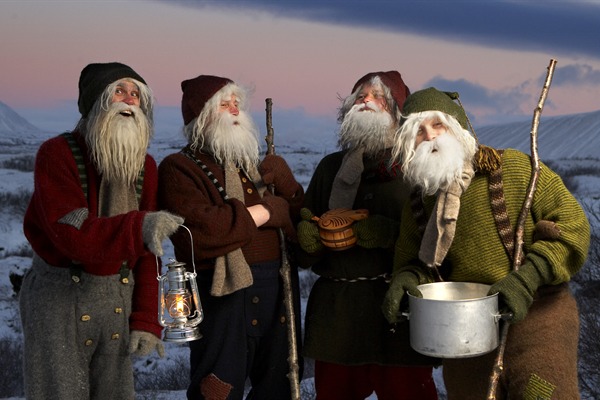
Gluggagægir - Icelandic Yule Lads (December 21st)

Gluggagægir (Window Peeper) is the tenth Yule Lad in the list. He’s one of my faves too. Maybe he actually is the Lad I like the most.

The Window Peeper is a classic figure in literature, music and cinema. If you don’t like the classic window peeper’s approach, just think about James Stewart in Rear Window, but reversed.

There are many elements at play when this kind of characters are involved so I can safely say Gluggagægir is the Lad with more potential: with a little of invention you could have a whole series of Christmas thrillers or horrors made after him.

Gluggagægir - Icelandic Yule Lads (December 21st)

Some consider Gluggagægir just a very nosy guy, but completely harmless – although he does like to steal when something he sees arouses his fancy. Some others prefer to add a sinister aura to his curiosity, describing him as a hardcore voyeur…

Whatever the truth, you are now aware of his habit of peeping through windows at night. So, unless you’re OK with it, maybe you’ll feel more comfortable drawing your curtains on December 21.

So, this guy may be looking in your window between Dec 21 and Jan 3, so give him a friendly wave and wish him Gleðileg Jól (Happy Holidays)

Icelandic

Tíundi var Gluggagægir,
grályndur mann,
sem laumaðist á skjáinn
og leit inn um hann.

Ef eitthvað var þar inni
álitlegt að sjá,
hann oftast nær seinna
í það reyndi að ná.

English

Tenth was Window Peeper
A grumpy lad,
Who sneaked to the window
And looked through it.

If anything was inside
Nice to look at,
He usually later
Tried to get that.

Berglind, Iceland24
December 2015

Bjúgnakrækir - Icelandic Yule Lads (December 20th)

In contrast with Skyrgámur‘s habit of eating tons of healthy skyr, Bjúgnakrækir (Sausage Swiper), the Yule Lad arriving on the 20th night of December, prefers his snacks high in cholesterol. Nobody knows exactly what his preference is: rumors say he will ravenously eat all kinds of sausages, without any exception. His appetite can make him reckless sometimes.

Smoked sausages are a brilliant way to preserve meat in a place like Berk (or most of the North Atlantic Islands) where it may snow and hail and rain locusts (or whatever Hiccup dreams up in his snarkfest), but it rarely gets cold enough to freeze food. So smoking, pickling, drying, curing are all ways to keep food stashed through the winter.

Bjúgnakrækir - Icelandic Yule Lads (December 20th)

The rafters are an ideal place to store the lamb meat and fish meat sausages once they are prepared. Then the cook just snags down dinner from the ceiling and dumps it in a pot to boil. Sometimes you have to climb a bit to get dinner. At the Haddock household it´s a good thing there is a tall chieftain and a willing Night Fury to help with this. And a few cleverly designed long hooks for those days when the chief dragon tamer/chef does not want dragon drool on the sausages.

Until December 20, of course. Then Bjúgnakrækir makes his way into the farms and the village, ready to snatch some sausages. It's a good thing he's an acrobat so he can climb WAAAY up into those rafters and reach for the prize. He just, unfortunately, is a leeetle bit afraid of heights. But singing usually helps him deal with the situation, and also keeps the watch dragon fast asleep.

So, if you are planning to make sausage stuffing or simply hot dogs between Dec 20 and Jan 2, keep 'em hidden. This guy's on the prowl!

Bjúgnakrækir - Icelandic Yule Lads (December 20th)

Luckily for this chap, there’s not much need for recklessness in recent times: in Reykjavík you can find near the harbor the famous Bæjarins beztu pylsur (Best hot dog in town in English) stand, described by many satisfied customers as one of the best in the world. I’m pretty sure Bjúgnakrækir knows very well and he visits the stand regularly during his annual excursions.

Icelandic

Níundi var Bjúgnakrækir,
brögðóttur og snar.
Hann hentist upp í rjáfrin
og hnuplaði þar.

Á eldhúsbita sat hann
í sóti og reyk
og át þar hangið bjúga,
sem engan sveik.

English

Ninth was Sausage Snatcher
Artful and quick.
He hied up to the rafters
And snatched a little there.

On a kitchen beam he sat
In smoke and soot
And ate a smoked sausage,
That was very good.

Berglind, Iceland24
December 2015

Þvörusleikir - Icelandic Yule Lads (December 15th)

Þvörusleikir, it loosely means "Spoon Licker," but it really means "Pot Scraper Licker."

Modern depictions of this Yule Lad show him as a very skinny guy licking a wooden spoon, but actually the spoon was not a spoon. It was a Viking age (and later) kitchen tool called a "Pot Scraper." This was a very long and skinny kitchen tool with a tip that was more like a very small, flat and narrow spatula rather than a spoon. It was a "þvera", pot scraper.

This goes back to the days when you did not waste food. So when you made soups and stews and porridge in Viking Days, you always needed to have them warm and ready to serve. This was specially so in the Mead Hall when you needed to have some warming food always on hand for people who needed it, whether it was a rescue crew going out on a mission or a traveler who stumbled into town and needed some hot, good food to warm up after a long journey. Hospitality to strangers was a point of pride for Vikings, so that kettle of hot, freshened soup or stew or gruel was vital.
Þvörusleikir - Icelandic Yule Lads (December 15th)

Þvörusleikir loves to steal the Þvera pot scraper from the Mead Hall and all the various households each night. He sticks each household Þvera in his mouth and licks it, pulling out the flavors of the stew or porridge.

It's not that efficient, and the other Yule Lads point this out often to Þvörusleikir. There just is not that much nutrition you can get out of licking a pot scraper or spoon or ladle. You'd do better to just pony up and buy a tasty, nutritious bowl of soup or stew.

But Þvörusleikir has his pride. He feels the wood of the þvera and the ingredients soaking into it somehow give it a real gourmet status. When you lick the þvera you bring out all the hidden flavors and have a true Michelin 4 star experience in gourmet spoon licking.

So, there's no use for it. Þvörusleikir lives on licking each household´s scraper and he is one skinny dude since there really is not a whole of nutrition coating the average Þvera or spoon or ladle.

Well, that's what happens on between Dec. 15 and Dec 28. Hang onto your ladles and wooden kitchen spoons because they are a hot commodity when Þvörusleikir is on the prowl!

Icelandic

Sá fjórði, Þvörusleikir,
var svakalega mjór.
Og ósköp varð hann glaður,
þegar eldabuskan fór.

Þá þaut hann eins og elding
og þvöruna greip,
og hélt með báðum höndum,
því hún var stundum sleip.

English

The fourth, Pot-Scraper Licker,
Was a very skinny lad.
And he was very happy,
When the cook went away.

He ran like lightning
And grabbed the pot-scraper,
Held it fast with both hands,
As it was sometimes slippery.

Berglind, Iceland24
December 2015

6 days itinerary trip in Iceland by Brooke (October 5th-10th)

In thanks for all of the tips I picked up from other travelers, here is brief trip report. Six of us were in Iceland on October 5-10, six days on the ground. We rented a van from Mike at Reykjavík Cars (www.reykjavikcars.com) and it worked out great.


He met us at airport, everything was incredibly convenient, even as I changed our car requirements as our group grew shortly before the trip.

Day one 

We landed in the morning, dumped the luggage at the Reykjavik Centrum Hotel, and set off on a self-led walking tour of sites in Reykjavik, including Hallgrimskirkja, the National Museum and the harbor area.


We had a tasty lunch of local fish at Icelandic Fish and Chips and took a rest. We had a truly outstanding dinner celebrating a 60th birthday at Grill Market. Service, led by waiter Yoel, was great.


The presentation of the food was lovely, food was delicious (fish, lamb, duck, veggie) and the special setting. When our staying/celebrating at the table was holding up other guests who needed to be seated, Yoel moved us into the bar area for complimentary coffee.

We then moved on for drinks at Loft Bar, properly recommended by Yoel as a good place for “older” folks.

Day two

We took on the Golden Circle, focusing on the traditional stops: Pingveller, Geysir and Gullfoss. I would say the waterfall was the most impressed spot for us.


That night we had dinner at a restaurant called Slippbarinn at the Marina Hotel that was recommended by a local contact; very nice, good food (we ate mostly fish) and nice atmosphere.


Since according to the websites and the hotel the solar activity forecast was promising, we took a Northern Lights drive back to Pingveller, but it was too overcast to see anything.

Day three

We set off on the Ringroad heading East - stopped at the beautiful Seljalandsfoss waterfall, walked behind the waterfall which was nice, had lunch in Vik at a lovely café, Halldorskkaffi.


We stopped at the little museum/shop dedicated to the Eyafjallajokull earthquake and then onto the breathtaking Jokulsarlon and a boat trip on the iceberg lagoon.

We arrived at Hofn in time for sunset and had good fish and lobster dinners where we were staying at the Hotel Hofn.

Day four

We walked along coast, harbor and through town and then back on the Ringroad headed West. We stopped at Jokulsarlon to see the changes that take place from hour to hour and day to day, quite amazing and then down to the beack to see the smaller (and not so small) pieces of ice that washed up on the black sand shore.


It began to snow and rain, and we headed to Skaftafell National Park and took walk for around 2 KM to a glacier while it snowed. After lunch at truckstop we headed back towards Vik. It was raining in Vik so we took quick look at the black sand beach and the Rrenisdranger “Troll Rocks” and then onto the lovely Volcano Hotel where we were staying for the night.


We were having dinner in the hotel dining room and had finished eating before desert when another guest ran in at 8:30 told us that the Northern Lights were visible in the sky. We stood outside and watched the natural light show.


We felt really lucky to catch this phenomenon during our shot visit to Iceland. When we returned inside for desert, we had a really informative and lovely conversation (includes pictures) with the hotel owner Johan, about his experiences living in the region.

Day five 

In the morning we did a wonderful two hour glacier walk on Myrdalsjokull with Tomas from Arcanum. Continuing West, we stopped at the impressive Skogarfoss waterfall, climbed up the steep metal stairs to the top and then walked along the muddy path which produced additional views of beautiful waterfalls, communing with sheep and vistas.


We ate a fish and chips lunch at the restaurant near the waterfall and then headed to the lodge-like Hotel Ranga, outside of Hella. An upscale place, we took advantage of happy hour, the hot tub and a nice dinner in their dining room.

Day six

This was our departure day so we headed directly to the obligatory Blue Lagoon for a couple of hours and then lunch in their dining room.


From there it was to the airport and an end to a too short Icelandic holiday.

Thanks again to all for the ideas you shared that helped us construct our trip.

Brooke, October 2014
Iceland24

Photography in Iceland - A Snapshot of Nature

You've framed the composition. Jagged volcanic rock formations are silhouetted against the crystal glacier horizon. Looking up from the viewfinder of your SLR, reality is confirmed; you are standing shrouded in the ethereal glow of the emerald and violet Northern Lights.

Photography in Iceland - A Snapshot of Nature

Snap!

It's little wonder why Iceland is seen as the photographer’s paradise. For the seasoned professional or the so inclined amateur enthusiast, there is no shortage of subject matter. With contrasting landscapes covering the island, each one more breathtaking than the last, Iceland is a photographer’s dream destination; from the charming small town islands of Vestmannaeyjar, to the enchanting scenes of nature at the Golden Waterfalls of Gullfloss, your individual photography fairy-tale awaits.

Photography in Iceland - A Snapshot of Nature

Iceland itself is a unique mix of cultures and traditions that have been refined by a beautiful, yet demanding, landscape. Those who visit cannot help but want to capture a small piece to take home with them. Even those who aren’t normally ‘shutter bugs’ suddenly find a desire to pick up a telephoto lens, a small pocket digital shooter or even a phone, to capture one of the many scenes that touch their imaginations.

Memories preserved on film serve to awaken the spirit of adventure in every naturalist and call one back to the island’s majestic scenes (even for a second to third visit).

Photography in Iceland - A Snapshot of Nature

Inspired photographers of all skill levels set out into the wilds of Iceland to capture that perfect shot. Iceland may be small, but it has so much to offer in terms of variety. The unique and simple beauty on the island gives photographers the chance to shoot assorted subjects that are suited to every individual’s photographic flare; scenes of nature, wildlife, culture, midnight sun, Northern Lights… you’ll be sure to find your picturesque opportunities in Iceland!

Photography in Iceland - A Snapshot of Nature

Some quick facts! Iceland has very few trees, making unimpeded wide shots featuring wild, rocky terrain commonplace. Around 11.5% of the country is covered in glaciers. Amazing glass-like structures protruding from the foreground and cascades of ancient ice slides rolling through the mountains are some of the more remote, yet fantastic scenes on the island nation.

In summertime, specifically in June and July, the island experiences 24 hours of day light. The merging of sunrise and sunset make for some magical images of glaciers, beaches or waterfalls bathed in pink and orange light.

Photography in Iceland - A Snapshot of Nature

Wildlife

For wildlife photographers, Iceland boasts a rich birdlife. Puffins are exceptionally popular models. Stunning bird cliffs can be found around the country with breathtaking sunsets over the sea in the distance. The Icelandic horses provide a graceful subject, if not a tricky one; better snap fast, those ponies are quick!

Photography in Iceland - A Snapshot of Nature

Whale watching is a popular attraction that doesn’t disappoint. No need to take long trips out to sea, the huge water-dwelling mammals swim very close to the Icelandic coast. If you feel more like capturing images of domestic animals, there are also plenty of sheep and cows - in fact, the sheep outnumber the people 2 to 1! Of course, Iceland is also famous for Santa’s flying friends. Reindeer herds roam freely in some areas.

Northern lights photography in Iceland

In addition to Iceland’s night life, there are the “night lights”. The Northern Lights are another natural wonder that is unique to regions lying in the Arctic Circle. Streaking the night’s sky with vivid color, the Arora Borealis can best be seen in the winter months away from populated areas.

Photography in Iceland - A Snapshot of Nature

The sight of the northern lights were considered a sign of something sacred to the Norse people; seeing the breathtaking sight today, it is easy to see why.

Culture 

There is no place better for quirky images of culture, food, architecture or people than Reykjavík! It is known for its colorful houses, arts, great nightlife and a personality all of its own. The Icelandic population is a mix of Scandinavian as well as Irish heritage, which is reflected in their food, architecture, and character. Dotted around the coastline of the country are a few towns and numerous small fishing villages. Some are very remote and in idyllic settings. The traditional turf houses are small cottage structures covered with earth and make for a rustic, quaint picture.

Photography in Iceland - A Snapshot of Nature

Iceland’s individuality, diversity and remoteness are what make it such a desirable destination for the amateur or the professional photographer. From its natural wonders, to its animal life and the people who call it home, this island nation has so much to take in, and so much to capture on film. One thing is for sure, on your next Icelandic adventure, you shouldn’t forget your camera!

Photo tours and photo workshops in Iceland

Iceland24 can get you in touch with the talented Florent Gast (info@landmannalaugartours.com), a fully licensed tour operator in Iceland.

Florent Gast is a fantastic photographer that has years of experience in photographing Icelandic nature and both organizes photo tours and workshops in photography. The workshops are small and personal and include information about long exposure methodology, concepts of landscape photography, visual design and composition, working with filters, post processing for web and prints, basics of time-lapse and more.

Photography in Iceland - A Snapshot of Nature

All the pictures in this article (and most of the pictures on this website) are taken by Florent, many of them during photo tours, such as this one that appeared recently in The Icelandic Times.

Photography in Iceland
Rachel - Iceland24
July 2014

Top 20 Things to Do in Lake Mývatn - Trip to Mývatn

Mývatn offers a unique natural environment. With large contrasts and small distances you can experience the most and the best that Iceland has to offer. Large open spaces with roads and walkways lead travellers to interesting locations, were volcanic eruptions have played a crucial role in the formation of the landscape.

Top 20 Things to Do in Lake Mývatn - Trip to Mývatn

Whether the plan is to enjoy the landscape, examine unique natural phenomena or take a closer look at the plant and bird life, Mývatn has it all. Furthermore the area offers a variety of services in accommodation, food and entertainment, based on years of experience and knowledge. A large number of travellers visit Mývatn in the summer, but many believe the lake and its surroundings to be no less impressive in the wintertime.

The lake was created by a large basaltic lava eruption 2300 years ago, and the surrounding landscape is dominated by volcanic landforms, including lava pillars and rootless vents (pseudocraters). The effluent river Laxá is known for its rich fishing for Brown Trout and Atlantic Salmon. The name of the lake (Icelandic mý ("midge") and vatn ("lake"); the lake of midges) comes from the huge numbers of flies (midges) to be found there in the summer.

Top 20 Things to Do in Lake Mývatn - Trip to Mývatn

Must do

-Drive or cycle around Lake Mývatn, one of the largest lakes in Iceland, 37km2. Varied bird life, unique nature with landscape being formed by intense volcanic activity. Possible to rent a bike.

-Climb up to the crater Hverfjall. Walk the whole circle around the rim of this beautiful tephra ring which is one of the largest in the world.

Top 20 Things to Do in Lake Mývatn - Trip to Mývatn

-Taste the traditional “Hverabrauð” with smoked trout. This is dark bread that the locals bake underground in the geothermal heat. Available at most cafe’s and restaurants.

-Take a relaxing bath in the Mývatn Naturebaths and don ́t forget to try out the natural steam bath as well, but steam bathing is an old tradition in the area. The spa is open all year round. Spoil yourself!

Summertime (1. June - 31. August): 09:00 – 24:00
Entry no later than 23:30.
Wintertime (1. September - 31. May):  12:00 – 22:00
Entry no later than 21:30.

More information: http://www.jardbodin.is/en/

Top 20 Things to Do in Lake Mývatn - Trip to Mývatn

-Go birdwatching around the lake and visit Sigurgeir ́s Bird Museum for an interesting showcase and great information on icelandic birds and their habits.

-Take a sightseeing flight from the local airport in Reykjahlíð village. It sure looks different from above, great views over the region.

-Rent a bike and cycle to the Höfði Peninsula. Great view to the lake, rich birdlife, trees and vegetation.There is a hiking path around the peninsula and great view from the top of the hill.

-Get lost in Dimmuborgir lava formations. Great place for hiking, with marked trails that take you around these beautiful natural formations. Beware of the trolls and elves around.

Top 20 Things to Do in Lake Mývatn - Trip to Mývatn

The Dimmuborgir area consist of a massive, collapsed lava tube formed by a lava lake flowing in from a large eruption in the Þrengslaborgir and Lúdentsborgir crater row to the East, about 2300 years ago.

At Dimmuborgir, the lava pooled over a small lake. As the lava flowed across the wet sod, the water of the marsh started to boil, the vapour rising through the lava forming lava pillars from drainpipe size up to several meters in diameter. As the lava continued flowing towards lower ground in the Mývatn area, the top crust collapsed, but the hollow pillars of solidified lava remained. The lava lake must have been at least 10 meters deep, as estimated by the tallest structures still standing.

The lava flow surface remains partly intact around the Dimmuborgir area, so that the Dimmuborgir itself sits below the surrounding surface area. The area is characterised by large hollow cell- or chamber-like structures formed around bubbles of vapour, and some dramatically standing lava pillars. Several of the chambers and pillar bases are large enough to house humans, giving rise to the term "castles" (borgir).

-Explore the pseudocraters at Skútustaðir, interesting crater formations formed in steam explosions when molten lava flowed over wetland.

-Visit the geothermal area Hverir by Námaskarð. High temperature area where you find steaming fumaroles and bubbling mudpools. Watch out it ́s boiling hot!

Top 20 Things to Do in Lake Mývatn - Trip to Mývatn

-Get to know the icelandic horse and it ́s good temper by taking a riding tour through the beautiful district of Lake Myvatn. No riding experience needed.

-Visit the Krafla area, one of Iceland ́s most active volcanic area. Marked hiking trail to Leirhnjúkur, where the lava is still steaming hot since last eruption in 1984.

Top 20 Things to Do in Lake Mývatn - Trip to Mývatn

-Hike the marked trail to the top of Mt. Vindbelgur. Amazing view over the lake, pseudocraters and the Mývatn region from the top.

-Take a day tour to the Askja Caldera and the nature reserve Herðubreiðarlindir. Scenes of unforgettable Icelandic nature and geology. Only accessible by 4x4.

Top 20 Things to Do in Lake Mývatn - Trip to Mývatn

-Experience the Aurora Borealis - Northern lights, during winter time. You can also go on a snowmobile tour or nordic skiing tour on the frozen Lake Mývatn.

-Meet the Icelandic Yule Lads in Dimmuborgir during the month of December. These are the 13 “santa clauses” of Iceland, funny and interesting fellows.

-Dettifoss is a waterfall in Vatnajökull National Park in Northeast Iceland, and is reputed to be the most powerful waterfall in Europe. It is situated on the Jökulsá á Fjöllum river, which flows from the Vatnajökull glacier and collects water from a large area in Northeast Iceland. The falls are 100 metres (330 ft) wide and have a drop of 45 metres (150 ft) down to the Jökulsárgljúfur canyon. It is the largest waterfall in Europe in terms of volume discharge, having an average water flow of 193 m3/s.

Top 20 Things to Do in Lake Mývatn - Trip to Mývatn

-Buy a traditional Icelandic woolen sweater, as a souvenir to take home. Knitted by the local ladies.

-Participate in the Myvatn Marathon held in May every year. One of the best views one can get while running a marathon. The track goes around the lake.

-Explore the beautiful cave Lofthellir, a weird world of ice and darkness. Amazing ice sculptures inside the lava cave. Only accessible on a guided tour and 4x4.

Top 20 Things to Do in Lake Mývatn - Trip to Mývatn

LINKS

Mývatn panoramic virtual tour
http://www.icelandvirtualtour.com/myvatn-skutustadir-pseudocraters.html

HIKING FROM DETTIFOSS TO MÝVATN

Many hikers go from Dettifoss to Mývatn (Krafla). This route is not marked and not within Vatnajökull National Park. However, for the many hikers that go this route, here are some points to consider.
Distances:


Dettifoss – Lake Eilífsvötn (west side) 12-14 km 

Eilífsvötn - Krafla ~12 km 

Krafla - Reykjahlíð ~13 km


Navigation  

The route from Dettifoss to Krafla is not marked and there is no clear path to follow. The hike from Krafla to Reykjahlíð is a marked trail and starts at the car park at Leirhnjúkur. Therefore, during most of the Dettifoss-Mývatn route, hikers need to have good navigation skills. 

Hikers need to know how to use a GPS instrument and/or a compass and have a good understanding of maps. There are hills and mountains in the landscape that are helpful for navigation, eg. the mountain Eilífur, which can be easily seen from nearby Dettifoss on a clear day. However, on a foggy day the forms of the landscape cannot be seen and it is easy to lose direction. Those who do not have good navigational skills are recommended not to go this route. 

Route landscape  

There are no special dangers on the route. The route from Dettifoss to Lake Eilífsvötn goes over a gravel plain, moor and tussocks and is quite easy to pass. From Lake Eilífsvötn, the conditions of the hiking route depends on which direction is chosen. The more west hikers go the more lava and ravines they pass, where special care has to be taken. 


Top 20 Things to Do in Lake Mývatn - Trip to Mývatn

Drinking water  

Hikers need to carry all beverages for each day of the hike, as there are only three places where there is access to drinking water:  

-On the campsite at Dettifoss there is drinking water in containers. Rangers from Vatnajökull National Park fill the containers with fresh water every day. Please use this water as spaerly as possible. 
-At Lake Eilífsvötn, both on the west side and east side, are springs and brooks which are safe to drink from. 
-At the toilet house at Krafla/Leirhnjúku
Berglind Rós, Iceland24
© 2014 Iceland24, December 2014