Icelandic horses: About the Icelandic Horse

When traveling around Iceland, you will probably notice the Icelandic horse, wherever you go. The small horse might look wild, but it is known for being very friendly, it is also believed to be one of purest horse breeds in the world. So what is Icelandic horse and why is he so unique? Here will be answers for those questions.


This small horse (average 135cm) came to Iceland when first viking settlers sailed to Iceland around year 800. Even though it is not a big horse, it is very strong, can carry a full-grown man and has adapted to Icelandic weather conditions very well. Most of the time horses spend outside, and during the winter time they grow very thick coat to protect themselves from the cold and strong winds.


The Icelandic horse is enormously muscular, and with very dense bones, often with a heavy head and compact body.  This breed is possessed of great agility and is also very sure-footed.

Icelanders are very proud of their horse, and it is not recommended to talk bad about their horses in front of them. Even they are in size of ponies, they are not called Icelandic pony.


The Icelandic horse is the only horse breed in Iceland. Natives are doing everything they can to protect their breed. That´s why all horse import in Iceland is strongly forbidden, no exceptions. Once the horse leaves Iceland, it never returns back. That way Icelanders can make sure their breed is pure and also no diseases come to the country.


Because Iceland is geographically isolated, with help of import ban, only very few horse diseases are known here. Which makes difficult for horses that leave this country, as they are are not immune for sicknesses that are popular in other countries.


Back in the days Icelandic horse was very important part of Icelandic people. Before cars came, it was the only way of transportation. Iceland is also one of not so many contries that eat horse meat (also still today). A popular entertainment among vikings was also stallion fights. Nowadays Icelandic horse is bred for leisure, sport and also meat.


The icelandic horse has 5 gaits.  The gaits are walk, trot and canter/gallop, like in other horses, but also the super smooth tolt and many of the Icelandics also master the 5th gait, the thrilling and fun flying pace.    

The tolt is a smooth four beat gait (similar to the running walk or rack)  The rider sits virtually bounce free at speeds up to 20 mph.  You can carry a glass full of beer or your favorite drink while riding the tolt, without fear of spilling it.  The tolt is a natural gait, and you often see foals and grown horses tolting in the pasture.


It is very popular among tourists to explore Iceland on horseback, there are many horse rentals all over Iceland that offer shorter and longer horse riding tours. If you have never had experience with horses, Iceland is a place to give it a try. Icelandic horse is a gaited horse, which means besides the „regular“ gaits that all horses have – walk, trot and canter, Icelandic horse has two „extra“ – tölt: very comfortable gait, often said to be faster version of walk and flying pace: a very fast gait, where the horse shows off all his power.


If you are interested in trying to ride and Icelandic horse, contact Icelandic Excursions (info@landmannalaugartours.com), and they will help you to find right riding tours that suits you.

Peter, Iceland24
June 2015

Green Driving Tips in Iceland

You CAN make a difference! 

As stated in our environmental platform, one of our objectives is to reduce emissions from the company´s car fleet. With regular maintaining and service, we keep our vehicles operating at peak efficiency. By following the „green“ driving tips below, you can improve your fuel economy and help us to reduce the negative environmental influence and create a greener future.

Plan routes and consolidate your trips: 

Whether going for a longer vacation or a quick trip, plan out your routes in advance to avoid heavy traffic periods and areas. If rush hour or road construction leads to traffic jams and stop-and-go driving, sometimes, the longer route can consume less fuel than a shorter one. So plan your routes to enable you to bypass congested routes and lead to fewer start-ups and less stop-and-go driving. Try to combine several short trips into one to save fuel and cut down on pollution. Warmed-up engines produce lower emissions.


Lighten your load and reduce drag: 

The more weight a car carries, the lower its fuel economy will be. Only pack what you need for vacations (including emergency items), and remove items that are not needed. Remove unneeded roof boxes, trailers and other items from your vehicle that cause wind resistance. These simple steps can cut significant weight and reduce drag, enabling your car to use less fuel.

Avoid quick starts, reduce your speed and keep the RPMs down: 

A smooth, steady speed improves your fuel economy, saves gasoline and reduces wear and tear on the engine, tires, transmission and brakes. As speed increases, so does drag. So, driving at higher speeds will reduce your fuel economy. Avoid quick starts. Putting the pedal to the metal when the stoplight turns green, increases your vehicle’s RPM level and lowers your fuel efficiency. Staying at or a bit below the speed limit and watching your RPMs can have a big impact on the environment and can lower your fuel cost. For every 15 km per hour you reduce speed, you can improve your fuel economy by 10 – 15%.


Think ahead in traffic: 

Try to anticipate stops and let your vehicle coast down as much as possible. Avoid the increased pollution, wasted gas and wear on your brakes created by accelerating hard and braking hard. Be smart as you navigate your way through traffic. Create space from the car in front of you and look ahead for any potential.

Keep a recommended air pressure in your tires: 

Maintaining recommended tire pressure can improve fuel economy as much as 6 percent. Over time, tires lose air pressure and as the air pressure decreases, rolling resistance increases and that makes your vehicle less fuel efficient. Recommended air pressure for your tires is shown in your vehicle’s owner’s manual.

Peter
Iceland24
May 2015

How to get from Keflavík International Airport to Reykjavík

Keflavík International Airport to/from Reykjavík:

Distance: 50 km
Methods of transport: Rental Car, Bus & Taxi

From Keflavík to Reykjavík

Going by Rental Car

This is the ideal option if you are looking for a hassle free journey and if public transport isn't your thing. For a very small fee, many of the well-known car rental companies in Iceland will provide a direct pick-up service from the airport. It's worth considering, as even if you're travelling with someone else, it's still cheaper than a bus ticket.

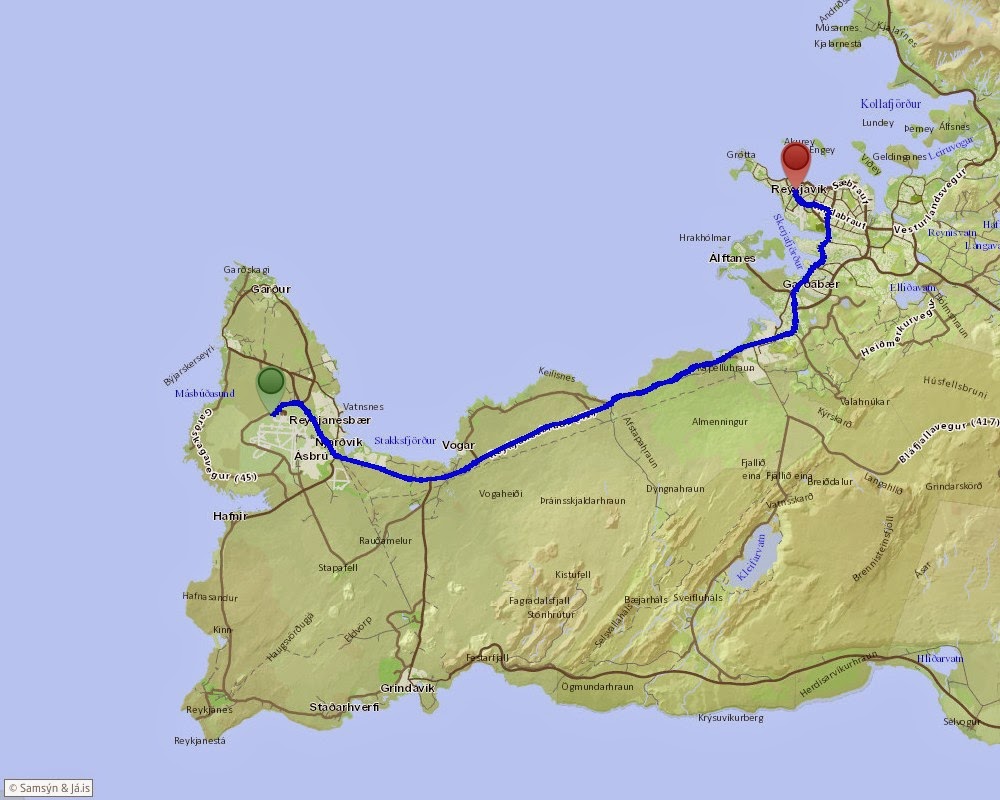
What better way to enjoy your first glimpses of Iceland than zipping along the country side with your own set of wheels. Also, it isn’t a difficult rout, directions are available at any time on map on ja.is.

From Keflavík to Reykjavík

Getting from Keflavík - Airport By Bus

There are two main air-link services to choose from: Flybus and Airport Express. Each providing effectively similar services, at a similar price, but with their own respective benefits:

Flybus:

- Provides pick-up for all flights. 
- 500 ISK charge per person for drop-off at hotel or guesthouse. 
- Free Wifi on all buses.

Airport Express

- Bookings must be placed in advance to guarantee a seat.
- Drop-off at most hotels and guesthouses in Reykjavík at no extra cost. 
- Wifi not provided.   

From Keflavík to Reykjavík
  
Getting from Keflavík - Airport By Taxi

Here in Reykjavík, the Taxi services are reliable, trustworthy, frequent and run on a meter basis. The usual price is around 15.000 ISK if you are traveling with up to 4 people. 

City Taxi is a small and reliable company, who will get you to where you want to go in a timely and comfortable manner. You'll be in good hands. (There is also no problem if you or a member of your group requires wheelchair access)!

You can usually get a cab without problem directly outside the arrivals area after you land; or, for your own peace of mind, have one booked waiting for you in advance. And now you know who to call!    

From Keflavík to Reykjavík

Alternative methods

If you are penniless and a bit adventurous you could try one of the following methods. Hitchhiking is a fairly common practice in Iceland and it's usually quite safe. Just always be sure to be safe and responsible if you are going to hitch. The certainty that you'll get a lift along this route isn't 100%, so you may have to do a little trekking before you get anywhere with it.

The second option, apart from walking (which let's face it, you'd probably struggle with even if you’d enjoy the scenery) is: keeping a look out for friendly, nice people who may have their car at the airport and would be willing to drop you off somewhere along their journey. There are lots of them in Iceland, don't worry. Strike up conversation on the flight or ask someone in the arrivals lounge if they're heading to Reykjavik too. If you don't ask you don't get – and what's the harm in trying, eh? 

How to get from Keflavík International Airport to Reykjavík
  
Directions

Finding your way to and from Reykjavik or Keflavik Airport isn't too much of a challenge, but should you need directions check out map on ja.is.

Safe travels!

Jóhanna, Iceland24
May 2015